
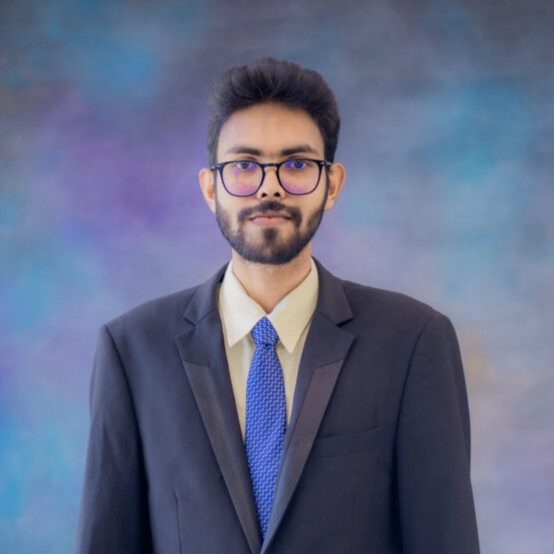
Mr. C. Nuwin Perera
Lecturer (Probationary)
Biography
Nuwin Perera is a lecturer (Prob) in the Department of Mechatronics Engineering at Sri Lanka Technology Campus (SLTC) and a member of the Computational Intelligence and Robotics (CIR) Research Lab. He holds a BSc (Hons) in Mechatronics Engineering, graduating with a Second Class Upper Division and receiving the Gold Medal for Academic Excellence and Silver Medal for Best Contribution to Research & Innovation.
His research interests span Biomedical Engineering, Artificial Intelligence, Robotics, Medical Robotics, Medical Imaging, and Assistive Technologies. His work focuses on developing intelligent and human-centered technologies for healthcare and rehabilitation. He has contributed to research projects involving wearable sensing, assistive robots, computer vision, haptic systems, and AI-driven healthcare applications. He is currently pursuing postgraduate studies in Medical Physics and aims to advance interdisciplinary research integrating engineering, AI, and healthcare to address real-world challenges.
Short Professional Summary
Nuwin Perera is a Lecturer (Probationary) in the Department of Mechatronics Engineering at Sri Lanka Technology Campus (SLTC) and a researcher in the Computational Intelligence and Robotics (CIR) Research Lab. He holds a BSc (Hons) in Mechatronics Engineering with Second Class Upper Division and is currently pursuing an MSc in Medical Physics (with Research). His academic and research interests span Biomedical Engineering, Artificial Intelligence, Robotics, Neuroscience, Human–Robot Interaction, Bionics, Brain–Computer Interfaces, and Assistive Technologies. He has contributed to multidisciplinary research projects and publications in biomedical robotics, intelligent robotic systems, healthcare technologies, and human-centered engineering, with a strong focus on developing innovative solutions to real-world healthcare and accessibility challenges.
Academic and Professional Qualifications
Currently pursuing an MSc in Medical Physics (with Research) at the University of Colombo. He holds a BSc (Hons) in Mechatronics Engineering from Sri Lanka Technology Campus, which he completed with Second Class Upper Division and a GPA of 3.69. His undergraduate thesis focused on the development of an Automated Injection Administration System. He was awarded the Gold Medal for Academic Excellence in Mechatronics Engineering and the Silver Medal for Best Contribution in Research & Innovation for the Class of 2023.
Teaching Areas
Robotics and Automation
Mechatronics Engineering
Control Systems and Modern Control Systems
Engineering Mechanics
Mechanics of Machinery
Fluid Mechanics
Thermodynamics
Mechatronics Engineering Design
Robotics Engineering
Autonomous Systems
Research Interests
Lie at the intersection of Biomedical Engineering, Artificial Intelligence, Robotics, and Neuroscience, with a particular focus on developing intelligent and human-centered technologies for healthcare. His areas of interest include Human–Robot Interaction, Bionics, Emotion-Aware Systems, Brain–Computer Interfaces, Biomedical Robotics, Medical Robotics, Assistive Technologies, and AI-driven healthcare systems. His research explores the integration of intelligent sensing, robotics, machine learning, and human-centered design to develop innovative solutions for healthcare, rehabilitation, accessibility, and human–machine interaction.
Publications
I have contributed to five peer-reviewed research publications focusing on biomedical engineering, assistive robotics, human–robot interaction, and immersive technologies. My research includes the development of a Smart Walking Cane for Enhanced Mobility and Safety of Visually Impaired Residents, presented at the 2024 IEEE International Conference on Advancements in Computing (ICAC). I also co-authored research on an Assistive Cartesian Healthcare Robot for Forearm Vein Puncturing, addressing automation in healthcare procedures. Further work includes Eagle-Leg Biomechanics for Enhanced Gesture-Based Robotic Gripping, presented at BioSMART 2025, exploring human biomechanics for robotic control. I have also contributed to research on Shape-Adaptive Haptic Gloves with Digital Twins for lifelike virtual reality experiences at MERCon 2025 and Environment-Aware Intention Generation in Robots via Multistage Perception and Language Reasoning at ICIIS 2025. These publications demonstrate my interdisciplinary research interests in intelligent robotics, healthcare technologies, biomechanics, and human-centered AI.
Research Projects
Involved in multidisciplinary research projects spanning Biomedical Robotics, Assistive Technologies, Human–Robot Interaction, Artificial Intelligence, and Smart Systems. His research projects include an Assistive Cartesian Healthcare Robot for Forearm Vein Puncturing, a Vision Perception-Enabled Nature-Inspired Inchworm Robot with Adaptive Surface Navigation, and a Smart Walking Cane for Enhanced Mobility and Safety of Visually Impaired Users. He has also contributed to research on Shape-Adaptive Haptic Gloves with Digital Twins, Eagle-Leg Biomechanics for Gesture-Based Robotic Gripping, Emotion-Aware and Intelligent Robotic Systems, and AI-driven Precision Livestock Farming. His work further extends to Generative AI applications in healthcare, inclusive virtual reality experiences, and intelligent sensor-based systems, with an emphasis on developing practical technologies that address healthcare, accessibility, and human–machine interaction challenges.
Awards & Achievements
- 1. Gold Medal for Academic Excellence, Mechatronics Engineering, Class of 2023, Sri Lanka Technological Campus.
- 2. Silver Medal for Best Contribution in Research & Innovation, Class of 2023, Sri Lanka Technological Campus.
- 3. Outstanding Paper Award at the 6th IEEE International Conference on Advancements in Computing (ICAC 2024), Colombo, Sri Lanka.
- 4. Patent for the Vision Perception-Enabled Nature-Inspired Inchworm Robot with Adaptive Surface Navigation System.
Areas of Supervision
Mechatronics Engineering
Robotics and Automation
Autonomous Robotic Systems
Biomedical Robotics and Healthcare Robotics
Artificial Intelligence and Machine Learning
Computer Vision and Intelligent Perception
Human–Robot Interaction
Assistive Technologies and Rehabilitation Robotics
Bionics and Wearable Systems
Brain–Computer Interfaces and Neuroscience Applications
Embedded Systems and IoT
Control Systems and Mechatronics Design
